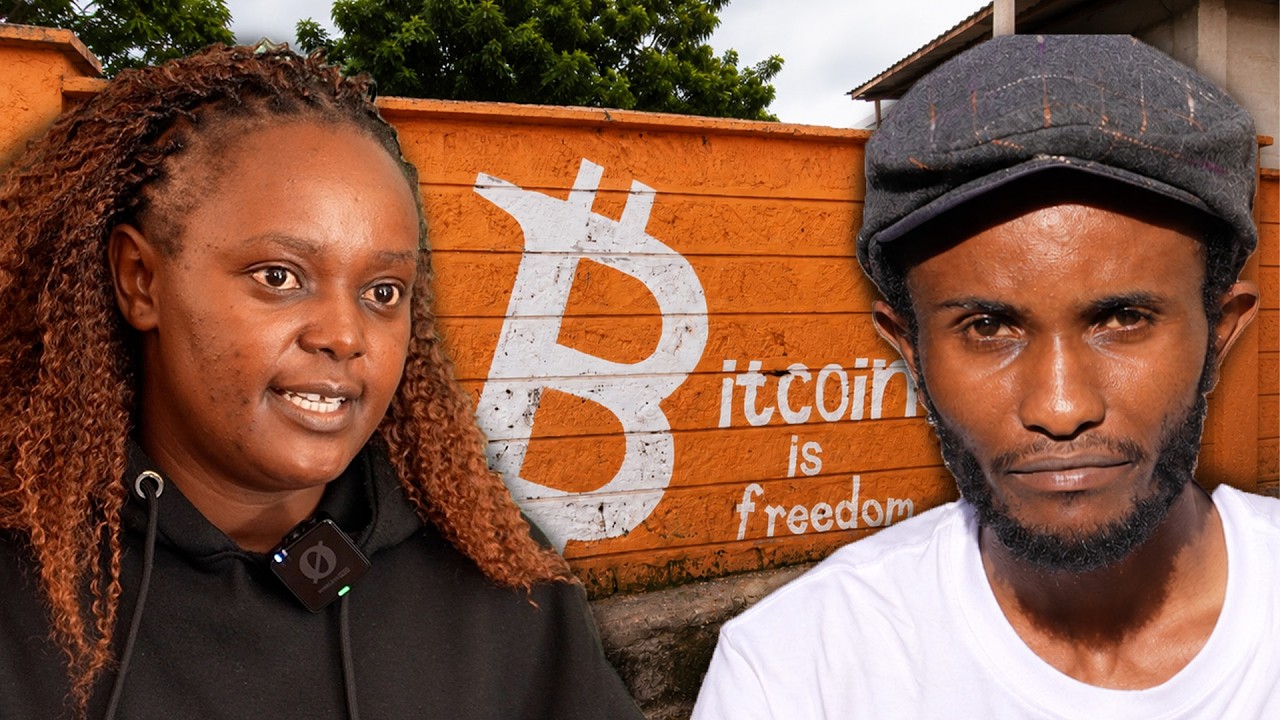
Bitcoin is an idea whose time has come, though most people do not recognize it at first. It is often ignored, misunderstood, or dismissed as noise until one small moment of curiosity breaks through. That single moment triggers a cascading effect that changes how they think about money, personal responsibility and the future.
That is the story unfolding in Kenya.
In Bigger Than Bitcoin, the documentary, we explore how empowerment is the key to successful bitcoin education. Across Nairobi, Machakos, and Kibera, Bitcoin is not a distant technological abstraction. It is being taught in classrooms, accepted by merchants, earned by children, used by women to save, and applied to local challenges such as waste management.
Education Fortifies Adoption
One of the most common mistakes in Bitcoin is assuming that access alone creates adoption. Bitcoin may be open to everyone, but openness does not automatically produce understanding. For many people bitcoin is often confused with the broader world of “crypto,” where scams, tokens, speculation, and failed promises have created understandable skepticism.
That is why education is not a secondary concern. It is the foundation.
In the film, Felix Mukungu, Founder of The Core, explains that after first encountering crypto through a pyramid scheme, the need for proper Bitcoin education became obvious. People did not simply need to hear that Bitcoin existed; they needed a clear framework for understanding what makes it different, why it matters, and how to use it responsibly.
When properly understood, bitcoin gives people the tools to evaluate Bitcoin for themselves rather than relying on hype, fear, or secondhand assumptions.
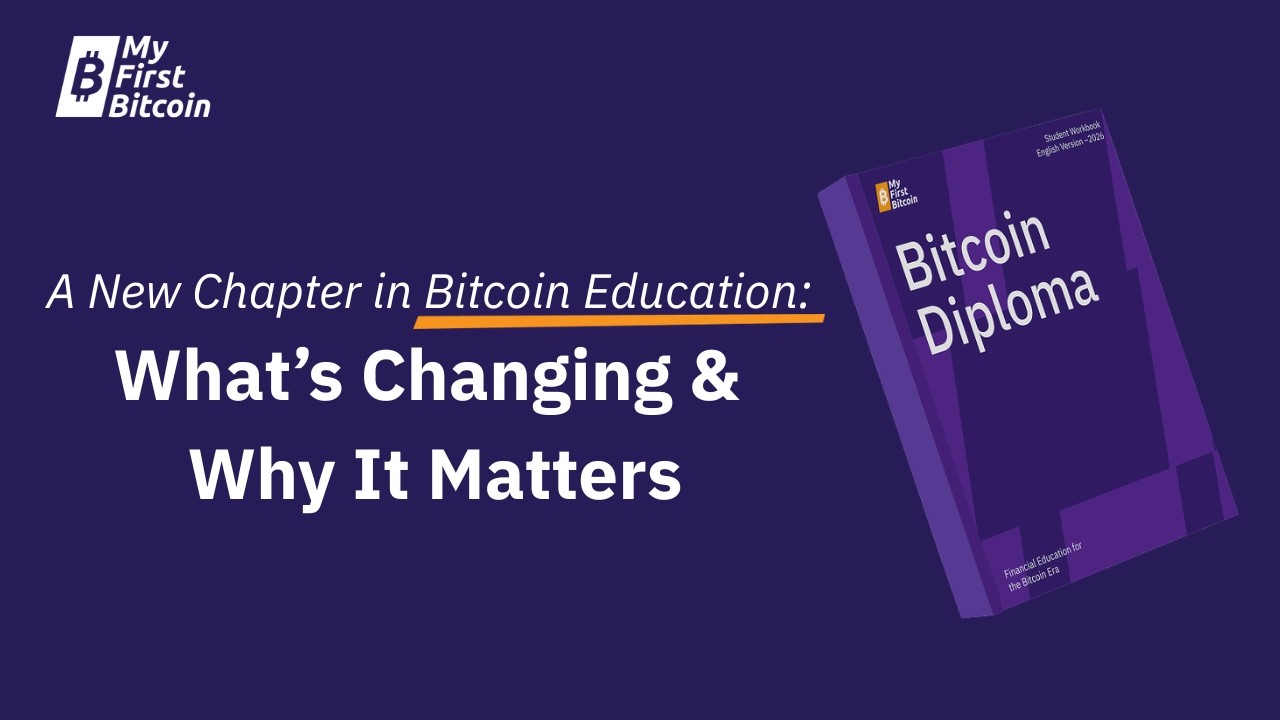
That is the role My First Bitcoin has played through the Bitcoin Diploma, an open-source curriculum designed to make Bitcoin education accessible, adaptable, and grounded in first principles. In Kenya, that curriculum is being carried by local educators who understand the needs, language, and lived realities of their communities. The result is not imported adoption. It is locally rooted education.
Circular Economies Are Built Through Consistency
The phrase “circular economy” sounds theoretical until it is seen in practice. In the Kenyan communities, the concept is simple: people earn Bitcoin, spend Bitcoin, accept Bitcoin, and gradually build local loops of exchange that reduce dependence on outside systems.
This is what adoption looks like when it moves from rhetoric to reality. It is a process of teaching, onboarding, transacting, returning, explaining again, and helping people become comfortable enough to use the tools themselves.
In Githurai, Kibera, Biashara and Mitaboni, we visited merchants accepting Bitcoin, including a diverse range of shops and a motorbike rider. The emphasis is not on abstract ideology alone, but on practical usefulness: lower transaction costs, access to a global monetary network, the ability to save, and the opportunity to serve customers who are already earning or holding sats.
Circular economies are not built by enthusiasm alone. They require patient repetition, local leadership, and a willingness to keep showing up long after the novelty has faded.
Bitcoin Changes Incentives
Two of the most memorable examples we saw were the EcoBitz and Usafi Boys waste management initiatives, where glass waste that had previously been dumped began to acquire economic value and get a second life. Bottles are collected, sorted, and exchanged for sats.
When people are paid in sats for collecting bottles, we see how incentives shape behavior. A cleaner neighborhood, a safer environment, and a more productive use of discarded materials can all emerge when value is assigned to actions that previously went unrewarded.
For someone looking at Bitcoin only through the lens of market price, earning a small number of sats for recycling may seem insignificant. On the ground, however, the significance is much deeper. 10 bottles can be turned into 210 satoshis, which is enough to purchase a meal.
Financial Sovereignty is Personal
In communities like Kibera, where access to banking is limited or unreliable, Bitcoin provides optionality: what if there is another way to hold, send, and receive value?
The film highlights work being done with teen mothers in Kibera, many of whom face serious financial and social barriers. For them, Bitcoin education is not a luxury or a hobby. It is connected to saving for a child, earning through a skill, controlling money directly, and thinking more intentionally about the future.
One of the merchants in the film, Steph, describes Bitcoin as different from banks because it allows her to actually own something. Ownership is emotionally meaningful, especially for young people earning income through their own labor. This reveals something important: financial sovereignty is not only a technical concept. It is also psychological.
Children Learn by Participating
The children’s program in Biashara offers one of the clearest examples of Bitcoin education through lived experience. During long school holidays, children in informal settlements can be left without structure while parents work. Loitering, drugs, gangs, theft, violence, and the broader social instability can emerge when young people are left without productive opportunities.
In response, BitBiashara community leader, Rosaline created a program built around activities such as dance, gymnastics, board games, mentorship, and community engagement. At the end of the week, children earned sats, which they could then spend with merchants in the same community.
This model teaches several lessons at once. It introduces children to Bitcoin, but it also teaches the relationship between effort and reward. It gives them experience making choices with money. It connects productive behavior with tangible outcomes. It also strengthens the local merchant network by bringing young participants into the circular economy.
A child who earns sats and spends them at a local shop will understand Bitcoin differently from someone who only hears adults discuss it in theory. Participation turns an abstract monetary network into something concrete.
Women Are Essential to Grassroots Adoption
The documentary also makes clear that women are not peripheral to Bitcoin adoption. They are central to it.
Women are educators, merchants, mothers, organizers, mentors, and connectors. They ask practical questions, evaluate whether Bitcoin is useful, and then share what they learn with others. Rosaline jokes that women do not know how to keep quiet about something good, which captures an important truth about grassroots networks: information spreads fastest through trusted relationships.
This is especially important because the questions women ask in the film are the questions that determine whether Bitcoin becomes useful in daily life. What benefit does it provide? Does it involve interest? How does it compare with mobile money or banks? Can it be used across borders? Can it help with saving? Can it support a business?
These are not abstract questions. They are adoption questions.
When women receive clear answers and practical support, they become powerful multipliers. A daughter brings a mother. A mother brings a friend. A friend brings a sister. A merchant tells a customer. A teacher introduces a student. Slowly, the network grows through relationships that already exist.
Permissionless Money Encourages Permissionless Action
The people in Bigger Than Bitcoin are not waiting for the ideal conditions to get started. They are not waiting for government approval, institutional funding, or perfect infrastructure. They are building with the tools, relationships, and resources already available to them.
This is one of Bitcoin’s most underappreciated effects. Permissionless money inspires permissionless action. Once people understand that Bitcoin is open, neutral, and available to anyone, it becomes harder to believe that meaningful change must always come from the top down.
Empowerment, Not Optics
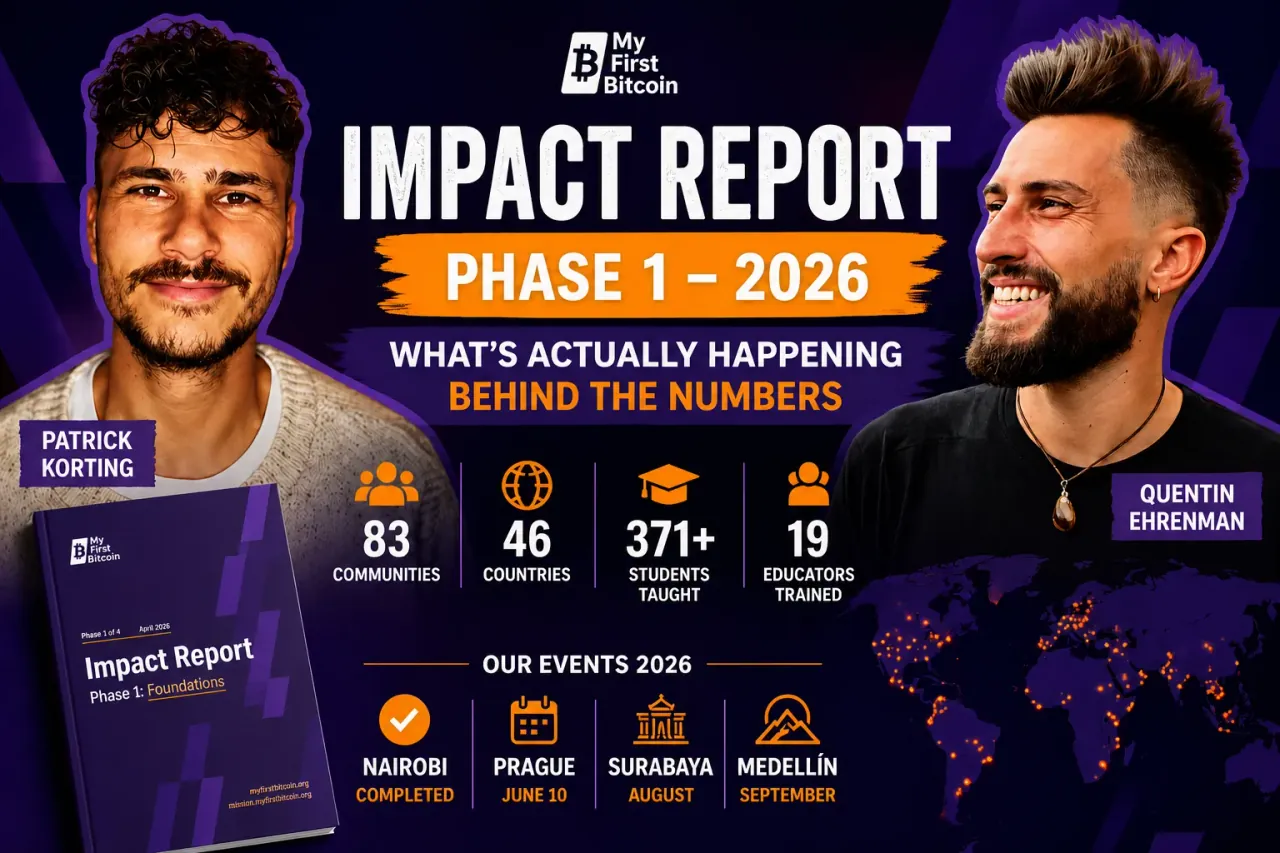
It is tempting to measure Bitcoin adoption only through numbers: wallets created, merchants onboarded, students graduated, transactions completed, or sats earned. Those numbers are useful, yet the deeper impact is not fully captured by metrics.
A young man discovers purpose. A merchant lowers their transaction costs. A teen mother begins to save for her child. A child earns sats through a constructive program. A community begins cleaning up waste.
These are not merely adoption statistics. They are signs of empowerment.
The work happening in Kenya matters because it does not treat people as passive recipients of charity. It treats them as capable participants in a global monetary network. That distinction is crucial. Charity may provide temporary relief, but education multiplies agency. It equips people to act for themselves, teach others, and build systems that reflect their own needs.
What Kenya Teaches the Bitcoin World
The lesson from Kenya is not that every community will adopt Bitcoin in the same way. They will not, and they should not. Every community has its own language, challenges, economic patterns, trust networks, and cultural context.
The lesson is that Bitcoin becomes meaningful when education meets people where they are.
Bitcoin education is not about persuading people to buy an asset. It is about helping people understand money, recognize their own agency, and use tools that were previously unavailable to them. Over time, that can change not only individual financial behavior, but the trajectory of families and communities.
Get Involved with My First Bitcoin
The work happening in Kenya is part of a much larger global movement.
My First Bitcoin is helping make independent Bitcoin education free, open-source, and accessible to communities around the world. Through the Bitcoin Diploma, educators are given a foundation they can use, adapt, translate, and bring into their own local context.
That is how this work scales: not through centralized control, but through many people taking responsibility for education in the places they know best.
Bitcoin is for everyone, but education is how that promise becomes real.
To support the mission, explore the curriculum, teach the Bitcoin Diploma, donate, or get involved with grassroots Bitcoin education, visit myfirstbitcoin.org.