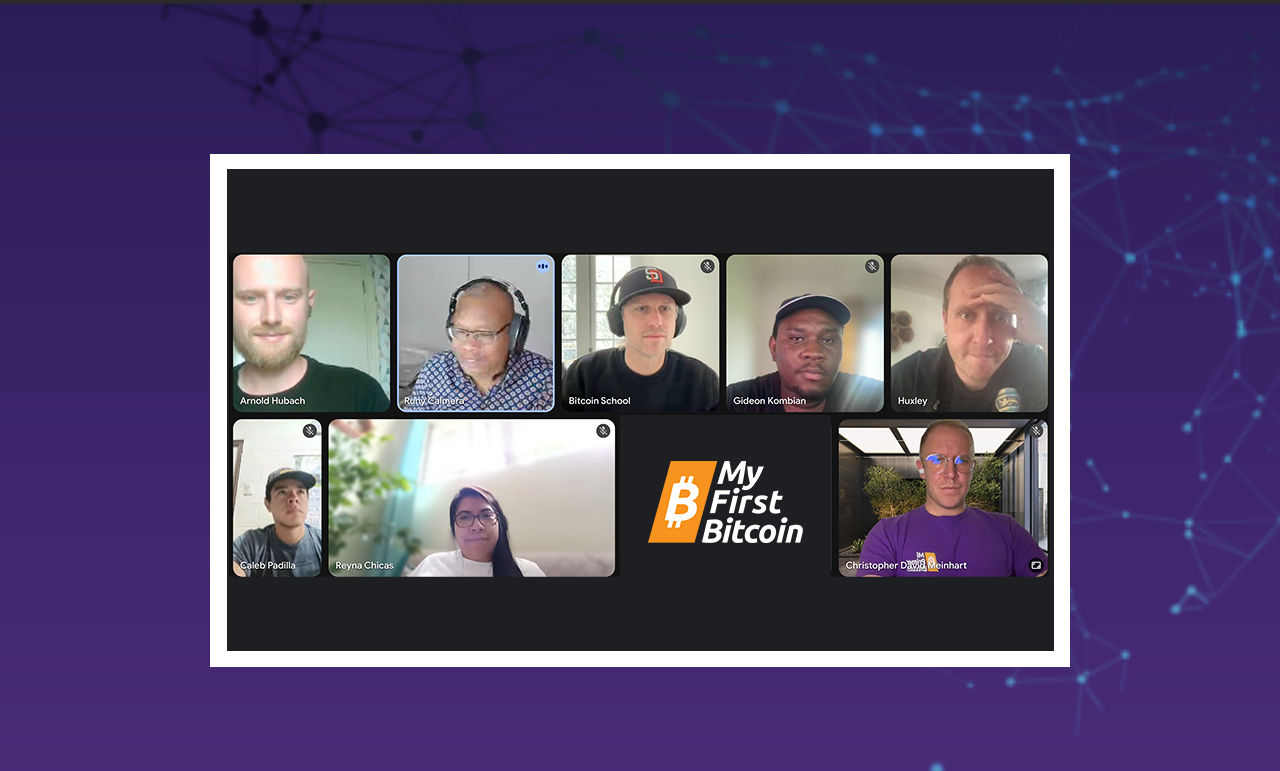
Independent educators are changing the world. They unite once a month in a General Assembly of theNode Network, an initiative from My First Bitcoin, to create a thriving ecosystem of educators around the banner of “independent, impartial, bitcoin-only and community-led bitcoin education”. The GA from June 26 was attended by a record of 33 individuals!
Welcome to this eleventh edition of this series & all progress that has been made in the past month. Welcome to the stories from these 11 countries!
1. Dream Grad Academy (South Korea)
”We’re excited to join the network as new members and look forward to contributing and growing together! This summer, we’re focused on learning, refreshing the DGA website, and preparing for the launch of our first cohort in Fall 2025.
In August, we’ll be attending the Unconference to connect with others, exchange ideas, and identify potential learners for future cohorts. We’re on track for our first official cohort launch in Fall 2025 and can’t wait to welcome our first group of learners!”
South Korea up first, Uruguay up next.
2. Bitcoin Punta (Uruguay)
”We’ve just completed the first version of our website – bitcoinpunta.uy | and are excited to have our online presence up and running! Right now, we’re diving deep into study and preparation to ensure we’re ready to answer even the toughest questions that may come our way. We’re also building key relationships with two secondary schools (one public, one private) to lay the groundwork for our first diploma courses, aimed at students aged 16–17 preparing for university. In parallel, we’re reaching out to local institutions – including the town hall and the accountant college of Punta del Este – to coordinate our first community outreach talks, planned for the fourth quarter of 2025.
Lastly, we’re in conversation with Juan Mayen from Blink to explore ways to connect their wallet to a local Uruguayan platform that allows for low-fee deposits and withdrawals – helping make Bitcoin more accessible in our region.”
Connecting Uruguay and Kenya!
3. The Core (Kenya)
”We’ve successfully completed Cohort 7 and are excited to have Cohort 8 now underway, continuing to grow our community of learners and builders. We’re gearing up for the Bitcoin Unconference on July 12, where we’ll share insights and connect with others driving Bitcoin adoption. As part of our local efforts, Phase 1 of our circular economy is in motion with 6 participating merchants. We’re now preparing for Phase 2 pilots, focused on real-world sats spending.
Finally, we’ve kicked off mentorship calls with new nodes, supporting them as they begin their journeys and strengthen the network.”
Kenya to Bolivia – the journey continues!
4. Bitcoin Research (Bolivia)
”We’re proud to share the latest milestones and ongoing efforts from our community in Bolivia, as we work to make Bitcoin more accessible - especially in underserved and marginalized areas. We recently conducted a Bitcoin workshop in a rural school where Aymara is the primary language. This was the community’s first introduction to Bitcoin, and both students and teachers engaged with curiosity and openness. We’re committed to developing educational materials in native languages to promote financial sovereignty. We’re getting ready to represent the Bitcoin community at Bolivia’s International Book Fair.
Our exhibit will feature titles like Mi Primer Bitcoin and Bitcoinismos, and we’re reaching out to authors globally to showcase more Bitcoin literature. In partnership with the Bolivian Institute for the Blind, we’re designing a practical Bitcoin training program tailored for visually impaired individuals - some of whom are active vendors of lottery tickets and mobile credit.
We’re launching an initiative to onboard local market vendors to Bitcoin, supporting real-world circular usage and helping small businesses explore alternative payment options. We’ve requested access to the foundation’s computer lab to deliver hands-on Bitcoin training. Participants will learn how to install wallets, send transactions, and gain confidence using Bitcoin.
Our community has launched the Mi Primer Bitcoin online course to help more people learn at their own pace. With a free, modular format, the course unlocks content progressively to encourage deeper engagement. While Blink Wallet and Tiankii have been instrumental in supporting our initiatives, funding remains a major challenge. We’re learning how to navigate platforms like Geyser and seeking advice, partnerships, and connections to help sustain and expand grassroots Bitcoin adoption across Bolivia.”
Next stop: United Kingdom.
5. Bitcoin Policy UK (United Kingdom)
”We’ve made great progress with the Turing Trust machines-selling 15 of the 20 donated computers, mostly through local meetups. These funds support our broader goal of getting more computers into the hands of other Bitcoin education nodes in the future. The long-term vision remains firmly in place.
Looking ahead, four new schools in the UK are set to begin teaching My First Bitcoin next year:
-
Blundell’s (Somerset)
-
St John Lawes School (Hertfordshire)
-
Ysgol David Hughes (Wales)
-
Sevenoaks School (Kent)
We’ve also had promising conversations with educators and researchers who are interested in adopting the curriculum further. At our own school, we plan to expand participation by offering the curriculum during lunchtime sessions-a low-friction way to involve more students and staff. On the innovation front, we’re exploring the development of an LNBits plug-in for the Moodle LMS. This open-source tool would allow teachers to automatically reward students in sats as they reach learning milestones-making Bitcoin learning even more engaging and practical.”
With the UK chapter complete, we’re setting our sights on the USA next.
6. Bismarck Bitcoin (USA)
”We’re excited to share that the owner of The Innovation Barn joined our most recent class and has been actively supporting us by sharing our work on social media – a big boost for visibility and community engagement. We’ll be covering Chapters 9 & 10, with two more graduates expected, marking the official completion of Cohort 1! We’re preparing a small graduation ceremony to celebrate this milestone.
As part of our fundraising efforts, we’ve prepped two nodes for sale, and we’re encouraging graduates to step into teaching roles for future cohorts – helping grow the movement from within. On the learning side, we’ve been tuning into the Founders Podcast and diving into books on sales and marketing to sharpen our outreach strategies and expand our impact in the local community.”
The journey continues as we make our way to the Dominican Republic.
7. Bitcoin Dominicana (Dominican Republic)
”We’re proud to have reached 94 merchants on BTC Map – a major milestone for our circular economy efforts in the Dominican Republic! Now, we’re expanding into a new province: La Romana, located on the country’s eastern side. In just a few weeks, we’ll launch a Bitcoin Diploma Program at Alianza Juvenil de Formación en Inglés y Computación, a youth center that trains over 200 students in areas like tourism, electromechanics, plumbing, and digital tools.
Through this program, students will explore how Bitcoin works, why it matters, and how it connects to the future of money, work, and technology. It’s a hands-on experience built to equip them with practical skills for the modern economy.
La Romana is on the rise – and Bitcoin is becoming part of the movement.”
Crossing continents once again: from the Dominican Republic to South Africa.
8. Bitcoin Ubuntu (South Africa)
”We’re proud to have completed Cohort 7 with The Core and launched a new cohort in collaboration with Bitcoin Boma. We also celebrated Bitcoin Pizza Day, strengthening local community connections, and engaged with the Witsand & Swellendam Business Forum, opening up conversations about Bitcoin for small business adoption. A number of new merchants have joined the movement, expanding the local Bitcoin economy.
We continue contributing to several active online cohorts, including: – Bitcoin Africa Story – Bitsavers Eduhub – Citrusrate – School of Satoshi
We’re also working on a refresh of our website, launching an introductory MFB course, and refining our educational tools to better serve learners across the region. We’re exploring the use of Padawan Wallet, a tool that may help other nodes introduce Bitcoin in a more hands-on and educational way – particularly for first-time users.”
Next stop: The Caribbean.
9. BTC Curacao (Curacao)
”We’re excited to share a branding mock-up for the Bitcoin Training Institute, including a visual of our logo displayed outside the center. Positioned along a busy highway in Curaçao, this branding will play a key role in attracting more students and raising awareness about our training programs.
Our current focus is on completing the renovation of the training room this quarter. While the work is taking longer than expected, we believe a dedicated and welcoming space will leave a strong first impression on students. We’re also preparing to host another Bitcoin Café Workshop, aimed at equipping both citizens and local businesses with practical Bitcoin knowledge. Our teacher continues to invest in self-education, diving deeper into all aspects of Bitcoin to provide richer learning experiences.
We’re placing more emphasis on decentralized communication tools, such as Nostr and Keet, and we recommend other nodes do the same.
Key takeaways: – Maintain control over your own websites and platforms. – Establish a presence on decentralized social media like Nostr. – Put decentralized communication and value transfer (e.g., Lightning Network) at the center of your strategy.
Runy is now moving his personal social media activity from LinkedIn, YouTube, and Facebook to Nostr and Keet – aligning with our commitment to decentralization in both message and method.”
After wrapping up the great work in the Caribbean, we’re heading straight to the United States to continue expanding Bitcoin education and adoption.
10. Operation Bitcoin (USA)
”We’ve expanded our VECTR training program to include a mining-specific curriculum, developed in response to interest and feedback from previous attendees. This addition allows us to offer more tailored education for veterans eager to explore Bitcoin’s technical side. Our next online cohort launches in mid-July, with 33 participants already enrolled. We’re excited to continue growing the program and welcoming new learners into the community.
We’ve learned that registering with Fidelity DAF is a relatively simple process for nodes with 501(c)(3) status. Additionally, fundraising through Telehash events has proven to be a powerful tool for connecting with supporters and sustaining our work. The Bitcoin Veterans community is hosting a Veterans Day Summit this November at Bitcoin Park in Nashville. We welcome speakers and workshop leaders who want to contribute to this meaningful gathering.”
Leaving the USA and diving right into Bitcoin Country!
11. My First Bitcoin (El Salvador)
”This month, we’ve continued creating opportunities through partnerships with local organizations, reaching a total of 125 students through both introductory classes and the Bitcoin Diploma program. We also participated in a variety of community events-including entrepreneur markets and local fairs-using the Mi Primer Bitcoin programs to bring Bitcoin education to even more people.
In addition, we’re finalizing our self-paced introductory class in English, which will soon be available through our online school to support more learners globally. Our current focus is on forming new alliances with NGOs involved in education, with the goal of partnering to deliver financial and Bitcoin education to their students and communities.”
Join the Network!
If you are a community leader and bitcoin educator and want to be part of the Node Network, check outour GitHub page.
If you want to use our open sourceBitcoin Diploma workbook, you can! It’s available on GitHub as well.
For any questions about the Node Network or any other international collaboration, feel free to reach out to Arnold Hubach ([email protected]).